Master Your Schedule: Canva Editable Weekly Planner Templates
If you have ever stared at a blank digital canvas on a Monday morning, wondering how to structure your week without spending hours on layout and design, you are not alone. The shift from chaotic task management to organized visual planning is a game-changer, but it requires the right tools. This is where Canva Editable Weekly Planner Templates step in, offering a bridge between raw scheduling and polished, professional presentation. These aren't just generic grids; they are professionally designed assets intended to streamline your workflow while elevating the aesthetic of your planning process.
The Anatomy of Professional Design: Why These Templates Stand Out
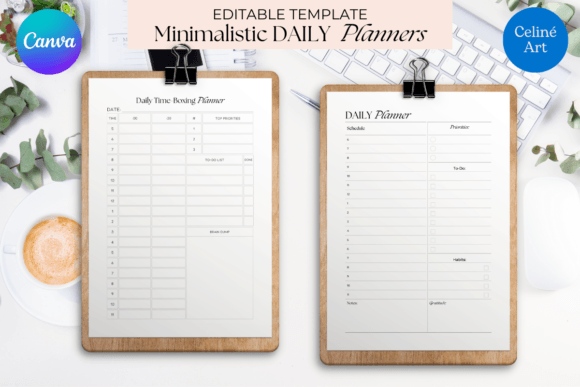
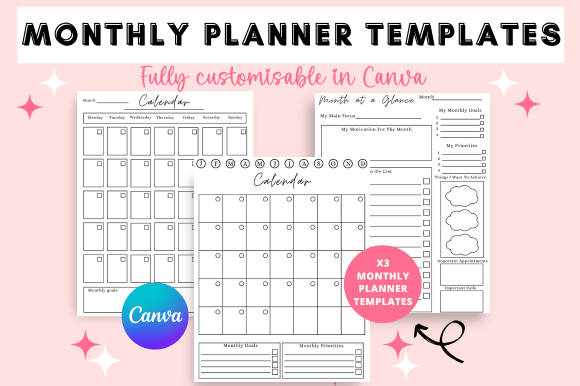
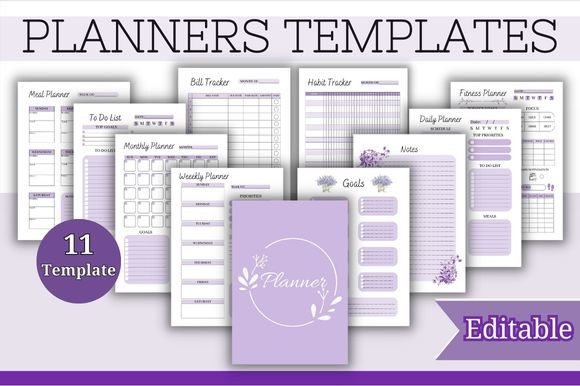
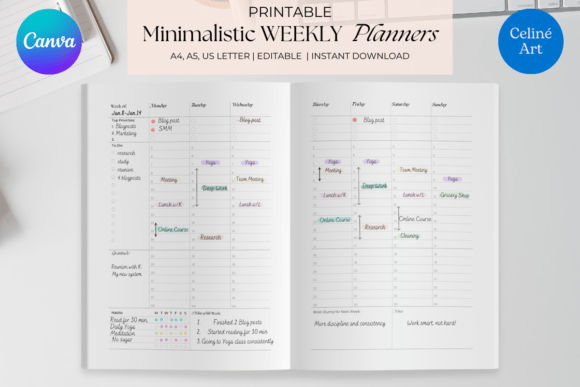
As someone who has spent years in design and brand strategy, I appreciate that a template is only as good as its underlying structure. These Canva Editable Weekly Planner Templates are built with a modern typography sensibility that balances form and function. They come in four distinct designs, offering enough variety to suit different personalities—from minimalist and corporate to creative and expressive. The visual hierarchy is already established for you; headings are sized correctly to grab attention, while body text remains highly readable, ensuring that your actual content takes center stage.
The appeal lies in their versatility. You are not locked into a specific color palette or font pairing. Because they are Canva Editable Weekly Planner Templates, you have total control over the design assets. If your brand identity relies on a specific serif font for a classic look or a sans serif font for a clean, modern feel, you can swap them out instantly. This flexibility makes them ideal for logo design consistency, editorial design planning, and maintaining a cohesive visual language across all your platforms. They are premium font-ready canvases that allow you to inject your unique style without compromising on professional structure.
Real-World Applications: From Personal Goals to Business Strategy
The true value of these templates is revealed in how they are used. For the entrepreneur or small business owner, these planners serve as a central hub for content creation and marketing strategy. Imagine mapping out your social media graphics schedule, email marketing blasts, and blog posts all in one view. The templates are designed to handle this density of information without looking cluttered. You can use them to plan packaging design timelines or coordinate product launches, ensuring every team member is aligned.
For bloggers, publishers, and content creators, visual planning is crucial for maintaining a consistent posting cadence. These templates act as a visual storyboard for your week. You can plan your web design updates or editorial calendar with precision. However, the utility extends far beyond the digital realm. With three standard sizes included—Letter Size (8.5’’ x 11’’), A4 (8.3’’ x 11.7’’), and A5 (5.8’’ x 8.3’’)—these designs are optimized for print. Whether you are printing a planner for your personal life to manage household tasks and fitness goals, or creating a physical handout for a workshop, the files are ready to go. The A5 size, for example, is perfect for a portable personal planner, while the Letter size works best for a desk reference in a busy office.
Designing for Clarity: Visual Hierarchy and Readability
One of the biggest challenges in DIY design is managing visual clutter. When you try to fit too much information onto a page without a clear structure, readability suffers. This is where the professional design of these templates shines. The layout guides the eye naturally from the date to the tasks. This attention to visual hierarchy ensures that even if you have a heavy workload listed, the page doesn't feel overwhelming.
Think of these templates as a foundation for your brand identity. If you are a creative professional, such as a crafter or a designer, you might choose to customize the templates with a script font or handwritten font for headers to add a personal touch, while keeping the task lists in a clean sans serif for maximum legibility. This mix of font styles—often seen in high-end stationery—adds personality without sacrificing function. The goal is to create a document that you actually enjoy looking at. When a planner is visually pleasing, you are more likely to use it consistently, which is the real key to productivity.
Customization: Making the Templates Your Own
The power of these assets lies in their editability. In Canva, you can easily apply your brand’s hex codes to change the color scheme, ensuring that if you are sharing this planner digitally with clients or your team, it reinforces your brand identity. You can upload your own logo and place it strategically in the header. This transforms a generic weekly planner into a bespoke piece of marketing collateral.
Furthermore, consider the file formats. While the primary work happens in Canva, the ability to download these as PDFs makes them versatile design assets. You can use them as lead magnets for your email list—a "Free Weekly Business Planner" is a high-value offer for any audience. You can also use them internally to track KPIs or project milestones. The four different designs allow you to rotate styles to keep things fresh, or assign specific designs to specific projects (e.g., Design A for Client Work, Design B for Personal Growth).
Practical Guidance for Choosing and Using Your Planner
When selecting which of the four designs to use, consider the density of your schedule. Some layouts are better for time-blocking specific hours, which is essential for consultants or designers billing by the hour. Others offer a more open layout with large note sections, perfect for brainstorming or journaling.
Here is how to get the most out of your Canva Editable Weekly Planner Templates:
- Evaluate the Fit: Look at the four designs. Does one align better with your industry? A corporate consultant might prefer a grid-heavy, minimalist layout, while a lifestyle blogger might gravitate towards a design with more white space and softer lines.
- Test Font Pairings: Don't just settle for the default text. Experiment with different font pairings. Try a bold display font for the days of the week and a legible body font for the tasks. This small tweak can significantly improve the look of your planner.
- Size Appropriately: Choose the size based on your usage. If you plan to print it and put it in a binder, the Letter Size or A4 is standard. If you want a desk pad or a more portable booklet, the A5 offers a compact yet functional canvas.
- Consistency is Key: If you are using these for business, stick to one design for a set period (like a quarter) to build familiarity with your team or audience.
Ultimately, a planner is a tool to reduce cognitive load. By using Canva Editable Weekly Planner Templates, you remove the friction of starting from scratch. You get the benefit of professional modern typography and layout principles applied to your daily life. Whether you are managing a complex business operation or simply trying to carve out time for personal hobbies, these templates provide the structure and flexibility needed to navigate your week with confidence and style.